





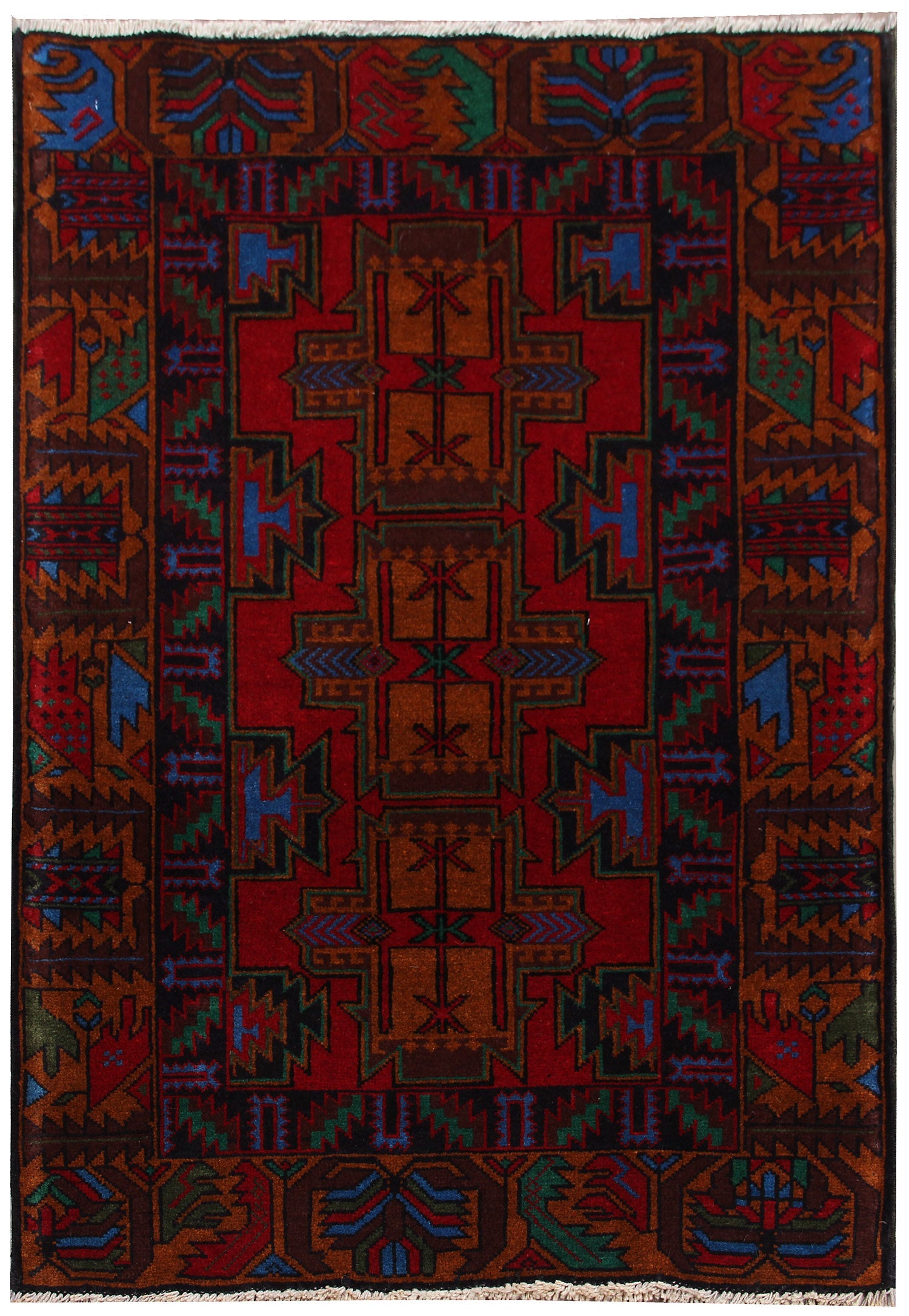

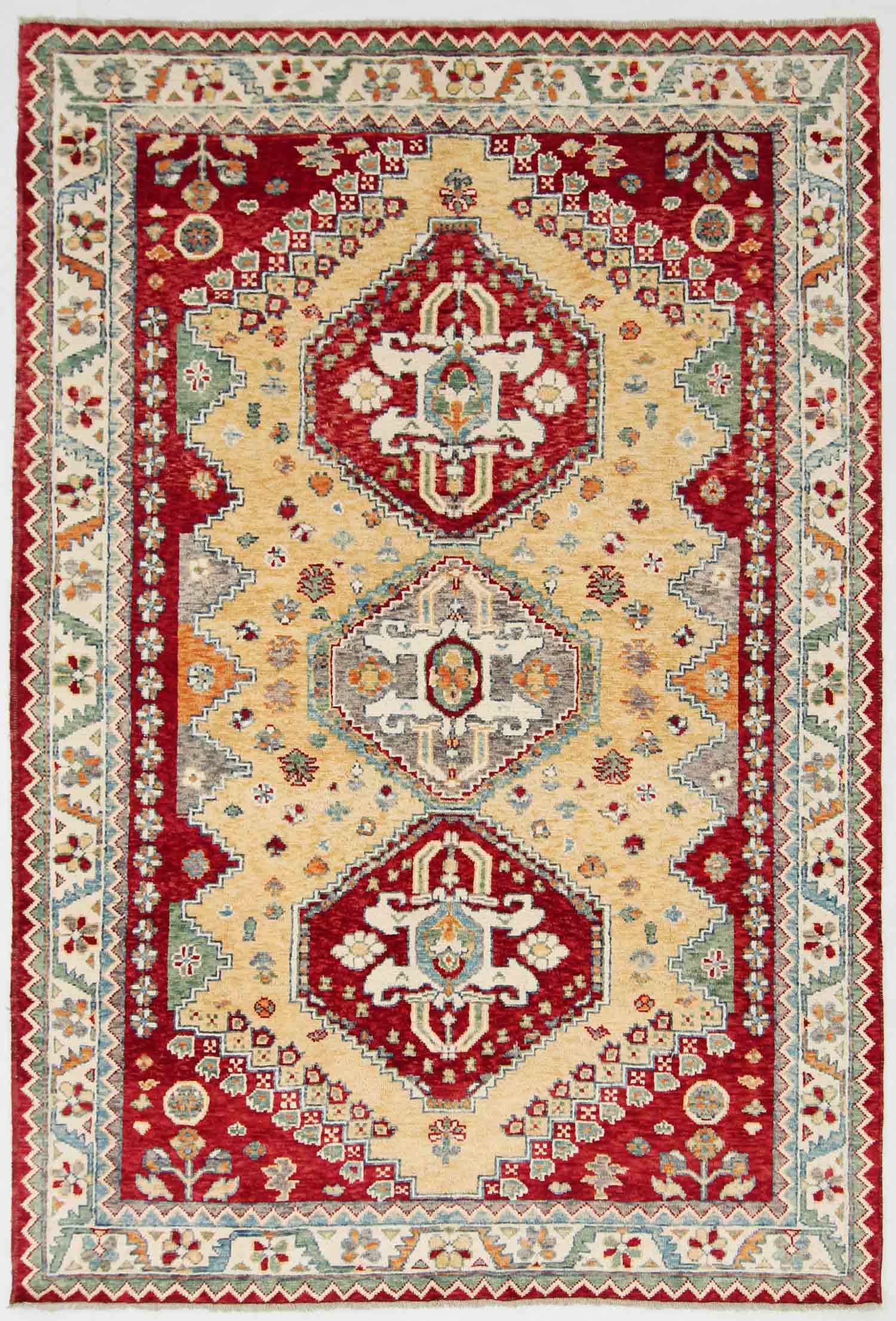

Oushak and Persian rugs are both known for traditional craftsmanship, beautiful patterns, and a long history of rug making. But they come from different rug-making traditions and can have very different visual characteristics.
The simplest difference is this: Oushak rugs are associated with Uşak in western Anatolia, Turkey, while Persian rugs come from the many regional weaving traditions of Iran.
Oushak rugs are often recognized for large-scale floral motifs, spacious compositions, medallions, and softly balanced colors. Persian rugs cover a much broader range of styles, from highly detailed floral designs to geometric and tribal patterns.
If you are deciding between an Oushak and a Persian rug, understanding the differences in origin, design, color, construction, and overall appearance can help you choose a rug that feels right for your home.
Oushak vs Persian Rugs at a Glance
| Feature | Oushak Rugs | Persian Rugs |
|---|---|---|
| Historical association | Uşak, western Anatolia, Turkey | Iran and its many regional weaving traditions |
| Common design characteristics | Large floral motifs, medallions, spacious compositions | Varies by regional style |
| Pattern scale | Often large and open | Can range from highly detailed to relatively simple |
| Common colors | Ivory, cream, beige, blue, terracotta and other warm or muted tones | Wide range including red, blue, ivory, green, gold and more |
| Materials | Wool is common in traditional examples | Wool, silk and other materials depending on the rug |
| Construction | Many examples are hand knotted | Varies by individual rug |
| Overall appearance | Relaxed, spacious and decorative | Highly varied, from intricate to open and geometric |
One important point: neither "Oushak" nor "Persian" describes just one pattern. Individual rugs can differ considerably in design, construction, material, origin, and age.
What Is an Oushak Rug?

An Oushak rug is associated with the historic weaving tradition of Uşak, a city in western Anatolia, Turkey.
Historic Ushak carpets became especially important during the Ottoman period. Museum collections include examples attributed to Uşak and western Turkey dating from the late 15th through the 17th centuries. The Metropolitan Museum of Art describes star and medallion Ushak carpets with large repeating compositions and floral elements.
The Oushak design language is commonly associated with:
- Large floral motifs
- Oversized medallions
- Open pattern arrangements
- Flowing vines and leaves
- Broad decorative borders
- Warm or softly balanced colors
The name may also appear as Ushak or Uşak.
Modern Oushak rugs can interpret this historical design tradition in different ways, so a contemporary rug described as Oushak should not automatically be assumed to be an antique rug made in Uşak.
What Is a Persian Rug?

A Persian rug traditionally refers to a rug associated with Iran, historically known as Persia.
Unlike Oushak, Persian rugs represent a very broad family of regional traditions. Rugs from different areas can have completely different designs, colors, materials, and construction methods.
Persian rug traditions include styles associated with places such as:
- Tabriz
- Isfahan
- Kashan
- Heriz
- Nain
- Kerman
- Qom
- Gabbeh
This variety is important when comparing Persian and Oushak rugs.
A Persian rug can have an intricate floral design, a central medallion, an all-over pattern, a geometric tribal composition, or a much simpler design.
So "Persian rug" is a broad category, while Oushak refers more specifically to a Turkish regional tradition and its associated design language.
What Is the Main Difference Between Oushak and Persian Rugs?
The main difference is their historical origin and the design traditions associated with them.
Oushak rugs are connected to Uşak and the broader Anatolian and Ottoman rug tradition.
Persian rugs come from the many weaving traditions of Iran.
Their histories are not completely isolated, however. Ottoman and Persian artistic traditions influenced one another. The Metropolitan Museum of Art notes that Ottoman carpet design changed during the 16th century through contact with Persian and Egyptian traditions, while Ushak became one of the important centers where Ottoman carpet designs were produced.
This shared history explains why certain motifs can appear across different rug traditions.
The difference is not simply "Turkish pattern versus Persian pattern." It is better understood through the specific rug's origin, design vocabulary, construction, and historical context.
Oushak vs Persian Rug Patterns
Pattern is one of the easiest differences to notice.
Oushak Patterns
Oushak designs are often associated with larger visual elements such as:
- Large flowers
- Oversized leaves
- Curving vines
- Large medallions
- Spacious fields
- Broad borders
Historic Ushak examples include star-shaped and medallion compositions. The Metropolitan Museum describes medallion Ushak carpets with repeating medallions and floral or leafy elements.
This larger scale can give Oushak rugs a relaxed and open appearance.
Persian Rug Patterns
Persian rugs encompass many different pattern traditions.
Depending on the regional style, you may see:
- Intricate floral designs
- Central medallions
- Repeating all-over patterns
- Geometric motifs
- Tribal designs
- Detailed borders
- Garden or vase compositions
Some Persian rugs are densely patterned and highly detailed, while others are much simpler.
This is why you cannot reliably identify every Persian rug simply by looking for a particular flower, border, or medallion.
Oushak vs Persian Rug Colors
Color is another noticeable difference, although there is considerable overlap.
Oushak Colors
Modern Oushak rugs are often associated with colors such as:
- Ivory
- Cream
- Beige
- Muted blue
- Soft gray
- Terracotta
- Dusty rose
- Warm gold
- Soft green
Historic Ushak carpets can have much stronger colors. For example, The Metropolitan Museum describes some historic Star Ushak carpets with rich red, dark blue, yellow, white, and green.
So the softer ivory and blue Oushaks commonly seen in contemporary interiors represent one part of a much longer design tradition.
Persian Rug Colors
Persian rugs can use a very broad range of colors, depending on their regional tradition.
Common colors include:
- Deep red
- Navy blue
- Cobalt blue
- Ivory
- Cream
- Green
- Gold
- Brown
- Rust
- Black
Some Persian rugs have strong contrast, while others use softer or more neutral palettes.
Are Oushak Rugs Persian Rugs?
No, oushak rugs are associated with the Turkish rug-making tradition, particularly Uşak in western Anatolia.
Persian rugs are associated with the rug-making traditions of Iran.
However, the history of rug design is interconnected. Ottoman and Persian artists and weavers influenced one another, and some motifs traveled between artistic traditions. Historical Ushak carpets themselves demonstrate this exchange.
So an Oushak rug and a Persian rug can share visual characteristics without being from the same tradition.
Are Oushak Rugs Turkish?
The historical Oushak tradition is associated with Uşak in western Turkey.
The Metropolitan Museum's historic Ushak examples are attributed to Turkey or western Anatolia, including wool rugs with symmetrically knotted pile.
However, the word "Oushak" in today's rug market can also describe rugs that use Oushak-inspired designs but were made elsewhere.
If the country of origin is important to you, check the individual rug's product information instead of relying only on the style name.
Are Oushak Rugs More Detailed Than Persian Rugs?
There is no universal rule.
Many Persian rug styles are known for intricate patterns and detailed borders, while Oushak rugs are often recognized for larger motifs and more open compositions.
But Persian rugs represent such a broad group of regional traditions that some Persian rugs are relatively simple or geometric.
Likewise, individual Oushak rugs can have considerable pattern detail.
It is more accurate to compare the specific rug rather than assuming every Oushak or Persian rug has the same level of detail.
Are Oushak Rugs More Modern Looking?
Not necessarily.
Oushak rugs have a long historical tradition, but their large motifs and often softer contemporary color palettes can make them particularly easy to incorporate into modern interiors.
They can work with:
- Modern furniture
- Neutral interiors
- Contemporary spaces
- Transitional rooms
- Minimalist interiors
- Traditional homes
A traditional rug does not require a traditionally decorated room.
The right Oushak can introduce pattern and warmth while allowing modern furniture to remain the focus.
Persian rugs can also work beautifully in contemporary interiors. The result depends on the particular rug, its pattern, colors, scale, and the surrounding furniture.
Which Is Better for a Modern Living Room?
Both can work well.
An Oushak with an ivory, beige, blue, or muted palette can bring traditional pattern into a modern or transitional living room without overwhelming the space.
A Persian rug can create a different effect depending on its regional style.
A highly detailed Persian rug may become a strong focal point, while a simpler Persian design can blend more quietly into the room.
Instead of asking which type is better, consider:
How much pattern does your room need?
Do you prefer large or small-scale motifs?
Do you want soft or stronger color contrast?
Should the rug become the focal point or complement the furniture?
These questions will usually lead you to a more useful choice than simply comparing the two categories.
Which Is Better for High Traffic Areas?
Neither category is automatically better for high traffic.
The suitability of a rug for a busy room depends on its construction, material, pile, placement, traffic level, and care routine.
For either an Oushak or Persian rug, check:
- Construction
- Material
- Pile
- Size
- Placement
- Care requirements
If you have children or pets, consider their habits too.
A rug in a quiet bedroom will experience different wear from one placed in a busy family room or entryway.
How Do You Tell an Oushak Rug From a Persian Rug?
Start with the rug's documentation rather than relying only on its appearance.
1. Check the Origin
Look at the stated country or region of manufacture.
Uşak and western Anatolia point toward the historical Oushak tradition, while Iranian regions point toward Persian rug traditions.
2. Examine the Design
Large-scale floral motifs, spacious fields, and certain medallion compositions are commonly associated with Oushak designs.
Persian rugs can have a much wider range of design structures.
3. Check the Construction
Find out whether the rug is:
- Hand knotted
- Handwoven
- Flatwoven
- Machine made
Construction is a characteristic of the individual rug and should not be assumed from the style name.
4. Check the Materials
Look for information about:
- Wool
- Silk
- Cotton
- Other fibers
- Fiber blends
5. Consider Age
If a rug is described as antique or vintage, look for information supporting its age.
An intentionally distressed or faded appearance does not by itself establish that a rug is old.
6. Review the Seller's Information
A trustworthy product description should provide useful details about the rug rather than relying only on broad labels such as "Oushak" or "Persian."
Oushak or Persian Rug: Which One Should You Choose?

Start with the room rather than the rug category.
An Oushak may be worth exploring if you prefer:
- Large-scale floral designs
- Spacious compositions
- Softer or warmer color palettes
- Traditional patterns with a relaxed appearance
- A rug that works comfortably with modern or transitional furniture
Persian rugs may be worth exploring if you want:
- A broader range of regional styles
- Highly detailed floral designs
- Geometric or tribal patterns
- Stronger traditional color combinations
- More variation in pattern scale
But these are general characteristics, not rules.
The individual rug matters more than the label.
Before buying, consider:
Size: Will it fit your room and furniture arrangement?
Color: Does it work with your walls, flooring, furniture, and natural light?
Pattern: Is the scale right for the room?
Construction: How is the rug made?
Material: What fibers are used?
Origin: Where was the individual rug made?
Lifestyle: Will it be exposed to heavy traffic, children, pets, spills, or outdoor dirt?
Explore Oushak Rugs
If you prefer the large-scale floral designs, open compositions, and distinctive colors associated with Oushak rugs, explore the QRugs Oushak Rug Collection.
Browse different sizes, colors, patterns, and individual rug specifications to find an Oushak that works with your space.
Explore Persian Rugs
If you are looking for Persian-inspired designs and want to compare different styles, explore the QRugs Persian Rug Collection.
The collection includes different traditional styles and patterns, allowing you to compare the visual character of Persian rugs with Oushak designs.
Frequently Asked Questions
What is the difference between Oushak and Persian rugs?
Oushak rugs are associated with Uşak in western Anatolia, Turkey, while Persian rugs represent a broad range of rug-making traditions from Iran. Oushak designs are often recognized for large-scale floral motifs and open compositions, while Persian rugs can vary widely by regional style.
Are Oushak rugs Persian?
No. Oushak rugs are associated with the Turkish rug-making tradition, while Persian rugs are traditionally associated with Iran. The two traditions have influenced one another throughout history.
Are Oushak rugs Turkish?
The historical Oushak tradition is associated with Uşak in western Turkey. Modern rugs marketed as Oushak can be made in other locations, so check the individual rug's stated origin.
Which is more detailed, Oushak or Persian rugs?
Many Persian rug styles are known for intricate patterns, while Oushak rugs are often recognized for larger motifs and more open compositions. However, both categories contain considerable variation.
Do Oushak rugs have floral patterns?
Yes. Large flowers, leaves, vines, and other botanical motifs are common characteristics of Oushak designs.
What colors are common in Oushak rugs?
Oushak rugs can feature ivory, cream, beige, blue, terracotta, green, dusty rose, gold, and many other colors. Historic examples can also feature stronger red, blue, yellow, white, and green tones.
Can Oushak rugs work in modern homes?
Yes. Their large-scale designs and range of colors can complement modern, minimalist, traditional, and transitional interiors.
Are Persian rugs good for modern homes?
Yes. Persian rugs encompass many different styles, and the right pattern, color, and scale can work with modern furniture and interiors.
Which should I choose, an Oushak or Persian rug?
Choose based on the individual rug's design, color, size, construction, material, origin, and intended use. Oushak may appeal to shoppers who prefer large-scale floral designs and open compositions, while Persian rugs offer a much broader range of regional styles.
Final Thoughts
Oushak and Persian rugs both have rich histories and distinctive design traditions, but they are not the same type of rug.
Oushak is associated with Uşak in western Turkey and is often recognized for large floral motifs, spacious compositions, and distinctive color palettes.
Persian rugs represent a much broader family of traditions from Iran, ranging from intricate floral designs to geometric and tribal styles.
The best way to choose between them is to look beyond the name.
Consider the rug's design, color, size, construction, material, origin, and how it will be used in your home.
If the open floral character and color palette of Oushak rugs appeal to you, explore the QRugs Oushak Rug Collection.